


Do tech leaders also need to think like entrepreneurs? For decades, the answer would have been NO. A technology leader’s job was to deliver systems on time, keep the infrastructure running, manage risk, and support the business. Entrepreneurship belonged to founders working in garages and venture-backed startups. Today, that distinction is rapidly disappearing.
Today, every company is under pressure to behave like a technology company, regardless of its industry. AI has lowered the cost of building software, shortened product development cycles, and made experimentation dramatically cheaper. Competitive advantage no longer comes from writing code faster. It comes from identifying opportunities before everyone else and turning ideas into measurable business value.
The Entrepreneurial Mindset
McKinsey’s Global Tech Agenda 2026, based on responses from more than 600 technology and business leaders, found that technology executives at the highest-performing organizations are deeply involved in business strategy, not just technology strategy. Nearly two-thirds of top-performing companies reported that their technology leaders play a significant role in shaping enterprise strategy. Those organizations also collaborate continuously between business and technology teams instead of relying on annual planning cycles.
Entrepreneurs begin with problems rather than technology. They ask where customers are frustrated, where markets are shifting, and where competitors have become complacent. Technology becomes the tool rather than the objective.
Great tech leaders are beginning to ask the same questions. Instead of asking, “How do we implement AI?” they’re asking, “What customer problem becomes easier to solve because AI exists?” That’s a completely different mindset.
Traditional technology leadership rewarded operational excellence. Modern technology leadership rewards opportunity recognition.
Being Comfortable with Uncertainty
Entrepreneurs become comfortable with uncertainty because they know they won’t have perfect information before making decisions. They launch minimum viable products, collect feedback, adjust, and improve. Waiting for certainty usually means arriving too late.
AI is pushing enterprise technology in exactly that direction. Development cycles that once took months now take weeks. Some prototypes take days. Organizations that insist on exhaustive planning before releasing anything will increasingly lose to competitors willing to experiment intelligently.
McKinsey’s research on corporate venture building reinforces this point. Its 2025 global survey found that organizations that repeatedly build new businesses consistently outperform those treating innovation as an occasional event. Experience compounds. Teams become better at identifying opportunities, testing assumptions, and scaling successful ideas. AI accelerates that entire cycle by reducing both development costs and experimentation time.
How Entrepreneurs View Failure
Entrepreneurs see failures differently. A failed experiment that costs two weeks and prevents a $20 million mistake isn’t failure at all. It’s inexpensive market research. That’s becoming one of AI’s greatest strategic advantages. The cost of testing ideas has collapsed.
Instead of debating whether customers might want a feature, teams can build a prototype, place it in front of users, and learn from real behavior. That feedback becomes more valuable than internal opinions.
Another entrepreneurial characteristic is resourcefulness. Startup founders rarely have enough money, enough people, or enough time. They learn to create leverage by combining existing assets in unexpected ways.
Technology leaders face the same challenge. Every CIO wants a larger budget. Every CTO wants more engineers. Every executive wants additional AI investment.
The entrepreneurial technology leader asks a different question. “What can we accomplish with the resources we already have?” Generative AI has become the ultimate force multiplier.
Routine coding, documentation, testing, and analysis are increasingly automated. That frees technical talent to spend more time solving higher-value business problems. Microsoft’s newly introduced EngThrive framework reflects this shift by measuring engineering organizations across speed, quality, ease, and developer well-being rather than focusing only on output metrics. The emphasis is moving from activity to outcomes.
An Obsession with the Customer
Many technology organizations still define success by completing projects. Entrepreneurs define success by changing customer behavior. Those measurements aren’t interchangeable.
Shipping software means nothing if adoption never follows.
The best technology leaders increasingly spend time with customers, sales teams, marketing leaders, and frontline employees. They search for friction that technology can remove rather than projects that technology can complete. That’s exactly how founders discover opportunities.
Perhaps the strongest evidence that technology leadership is becoming entrepreneurial comes from AI itself.
McKinsey recently argued that AI is turning every company into a software company. As software becomes easier and cheaper to create, the real constraint shifts from engineering capacity to business imagination. The winners won’t be the organizations that generate the most code. They’ll be the ones that identify the most valuable problems worth solving.
The future CTO, CIO, and Chief AI Officer won’t be judged primarily by uptime, delivery schedules, or infrastructure modernization. They’ll be judged by revenue created, markets entered, customer problems solved, and competitive advantages built.
Technology expertise remains essential. But business expertise is becoming mandatory. Entrepreneurship connects the two.
The organizations that thrive over the next decade won’t separate technology leaders from entrepreneurs. They’ll expect their technology leaders to become entrepreneurs.
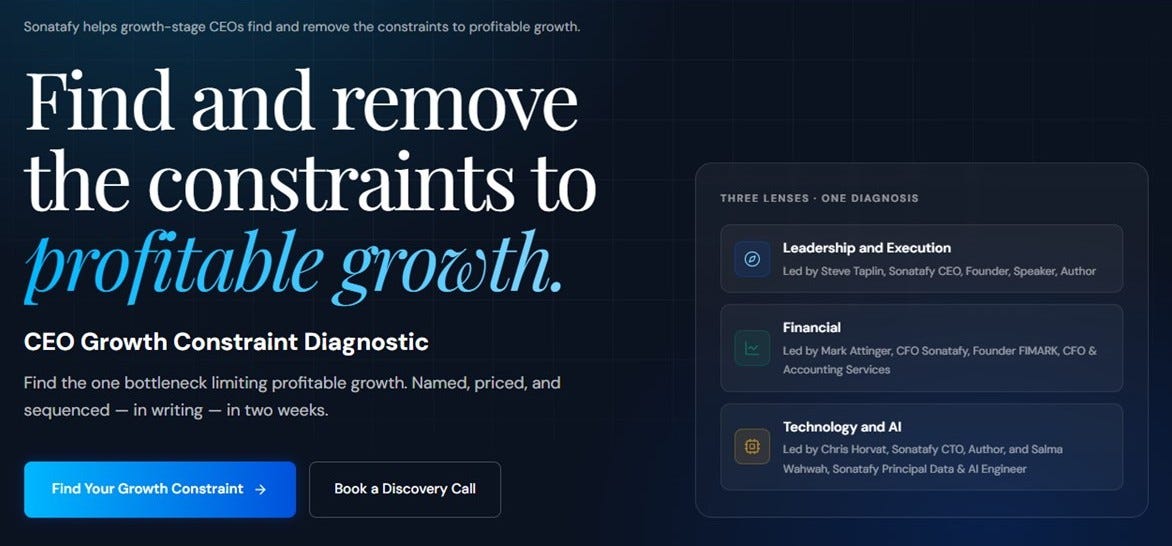
Tech leaders used to think their only job was keeping the infrastructure running on time.
That old playbook is dead. When your technical systems and software are buried under corporate jargon, even the best engineering fails to convert into revenue.
The most successful operators bridge that gap by using sharp words and language to translate deep tech into high-ticket value, turning technical infrastructure into a high-converting website or ecosystem that speaks human.