


Give every developer an AI assistant, and the team’s work begins to change. Code arrives faster, questions get answered without a conversation, and tasks that required several specialists become accessible to more people.
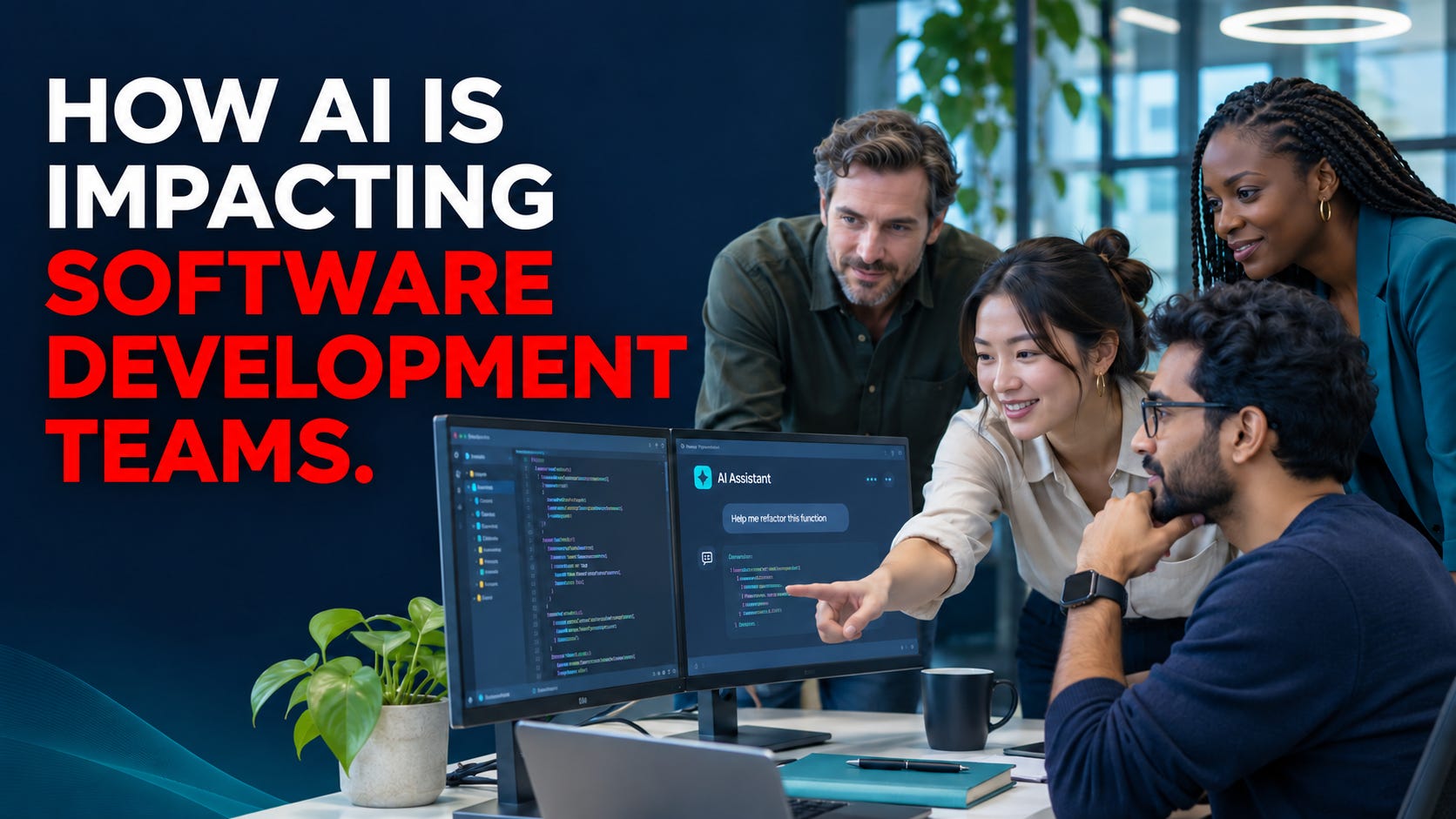
Those changes reach beyond individual productivity. They affect who makes decisions, how knowledge moves, where work accumulates, and who takes responsibility when software fails. Leaders buying AI tools are also making choices about how their teams will function.
Individual Speed Changes the Team’s Workload
A developer who generates an implementation in an afternoon can create several days of review, testing, and integration work. The gain at one stage becomes pressure on the people handling the next.
Consider a team building a payment feature. AI helps developers produce service code, interface components, and tests. Reviewers still need to examine authorization, transaction failures, duplicate payments, and compatibility with existing systems.
If implementation accelerates while review capacity stays fixed, unfinished work can accumulate. Teams should watch the time from starting a change to running it in production, including the queues between those stages.
DORA’s 2025 research describes AI as an amplifier of organizational strengths and weaknesses. Drawing on nearly 5,000 survey responses and more than 100 hours of qualitative research, the report argues that existing organizational conditions shape the value AI delivers.
Team Conversations Are Changing
Developers can ask AI to explain an unfamiliar function, summarize documentation, or suggest how to diagnose an error. That creates opportunities to work through problems without waiting for a colleague.
A 2026 JetBrains study found that developers perceived fewer interruptions and greater focus when AI handled routine technical questions. Participants also described human conversations shifting toward clarification, joint reasoning, and alternative perspectives.
That shift can improve collaboration. A developer can arrive at a design discussion with the background research completed and several options to examine.
Teams still need to share what they’ve learned. If useful discoveries remain inside private AI conversations, colleagues may repeat investigations or make decisions using different assumptions. Recording the reasoning behind a change becomes part of keeping the team aligned.
Experience Takes on Greater Value
AI makes it easier to produce code outside someone’s area of expertise. A backend developer can draft interface components, while a product engineer can attempt infrastructure changes.
This flexibility can reduce handoffs, but generating a plausible solution doesn’t establish that it fits the system. Someone needs to recognize the missing constraint, the security exposure, or the dependency that makes a suggested approach unsuitable.
Senior engineers may therefore spend more time establishing boundaries, examining tradeoffs, and reviewing unfamiliar implementations. Their workload deserves attention because a team can increase output while concentrating judgment in fewer people.
Organizations should also protect the development of junior engineers. Asking someone to explain generated code, modify its behavior, and diagnose a failing test creates opportunities to assess understanding and strengthen it.
Ownership Needs Clear Boundaries
When an AI assistant contributes to implementation, testing, and review, teams need an explicit answer to a basic question: who owns the change?
The developer submitting it should understand its behavior and limitations. Reviewers need enough context to evaluate it, and the team needs agreement about which changes require specialist attention.
Generated tests deserve the same scrutiny as generated code. A passing test suite offers limited reassurance if the tests repeat the implementation’s assumptions and overlook the conditions that matter to customers.
Clear ownership helps teams use AI without allowing responsibility to dissolve across tools and handoffs. It also gives developers permission to pause a change when they can’t explain why it works.
Management Needs a Wider View
Counting prompts, generated lines, or accepted suggestions tells leaders little about whether the team is delivering better software. Those measures can reward activity while obscuring review delays, defects, and rework.
Microsoft Research’s 2025 study of more than 500 developers found that perceived benefits varied with task complexity, usage patterns, and team adoption. It also identified organizational support and peer learning as important to realizing AI’s value.
Managers should examine delivery time, production quality, review workload, and the distribution of knowledge. They should also ask whether developers have enough time to understand and maintain what they ship.
AI gives software teams more ways to create solutions. Turning that capacity into lasting improvement requires coordination, shared understanding, and accountable decisions. The strongest teams will use the tools to expand what people can accomplish together while preserving the judgment that makes their software dependable.
CLICK TO LEARN MORE >
